Postcard from an accidental emigrant
By Gary Finnegan
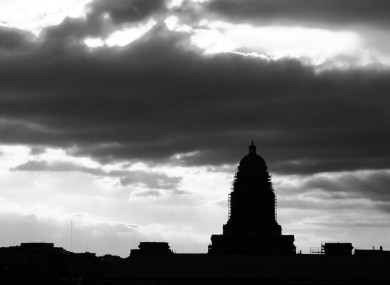
Image: Photo by DamienHR on Flickr
Two weeks later the Irish government signed a blank cheque guaranteeing the debts of Irish banks. It seemed interesting but incidental to our plans. Bad news for bankers, we thought. Tough times for politicians too.
Good job we’re neither wealthy nor important. “Two coffees, a scone and a brownie please.”
We sat sharing a British broadsheet in a Belgian café staffed by mustachioed middle-aged waiters. The papers spoke of an economic earthquake but we observed it like an audience watching a grand drama unfold in high definition without realizing we were part of the play.
We were Irish expats. We were abroad by choice, having left a booming Dublin in 2007. Lap up a bit of foreign culture and head home when we’d had our fill. That was the plan. Little did we realise that the door leading back to Ireland was closing behind us.
Much has changed in the 30 months that have passed since then. A temporary spell abroad which could be wound up at a time of our choosing has morphed into an enforced economic exile, open-ended if not permanent.
We have emigrated. Accidentally.
Suddenly we were at the mercy of bond markets and Frankfurt financiers
It’s becoming a familiar story. Our friend, a research chemist, did post-doctoral work in the Netherlands and the US but knows nothing of Ireland’s knowledge economy. There are no jobs in Irish universities. Another pal with expertise in the wind energy sector is stranded 5,000 miles from the shores of our Innovation Island.In 2007 we were twenty-somethings with a misplaced sense of control. Now, in 2011, we are in our thirties, feeling at the mercy of foreign forces: bond markets, Brussels bureaucrats, Frankfurt financiers.
We are not badly off, I appreciate that. I should be grateful to have strolled out the door ahead of the stampede. And relieved to have dodged the debt trap. But if I devoted adequate time to counting my blessings it would leave too little time for complaining.
For my partner and me, there was a quietly-spoken hope that if we spent a few years away we’d come back to Dublin to find property prices had returned to earth. That part of our wish came true. What we didn’t fully appreciate was that this couldn’t be an isolated collapse. House prices wouldn’t simply slide back towards a normal multiple of the median income, they would drag everything and everyone down with them.
A modest house might soon approach a reasonable price but nothing can be described as affordable when your employment prospects have nosedived.
The psychological shift from expat to emigrant coincided with an acceptance that our fearless attitude to always being able to fend for ourselves was unfounded. It seemed, for a time, that decisions like where to live, whether to have children, what to have for lunch, were all higher on the list than where the next pay packet would come from.
Such was our lack of concern with finding work – we had known only full employment – that we’d packed in two perfectly good jobs in the summer of 2007 and indulged in a year of travel. It’s a sure sign of unsustainable complacency when productive work can be jettisoned in the name of adventure and ‘experience’.
For no good reason, we headed to China. It seemed as unnecessary a place to visit as any, and thus fitted the bill neatly: it was completely alien and its paths were not as well worn as the backpacker trails of Thailand. It catered to our need for novelty as well as our sense of snobbery about roads well travelled.
We earned €100 a week teaching part-time at a university in the outer reaches of Beijing’s concrete sprawl, giving me time to write a book about a rapidly changing China. One seasoned reviewer noted that the tradition of Irish writers charting the hardship of emigrant life had been replaced by whimsical travelogues penned by people traveling for the sake of travel.
“He’s right,”I said, “things have changed”, without realising how fleeting our generation’s illusory freedom would prove to be.
Landing in Brussels, jobless but still with a fading sense of Celtic Tiger confidence, we defied the global recession to find work and carve out a life here until we felt like living in Ireland again.
Will our daughter feel Irish or Belgian?
Every day since September 2008, reality has been seeping in remorselessly. The tide has gone out and shows no sign of turning. In the meantime, we hit the unsettling age of 30 and temporary turbulence we read of in that Belgian café has become a permanent background noise. And the prospect of returning to Ireland gets dimmer (which makes it all the more desirable).In an increasingly complex world, a simple choice was presenting: either get on with life in Brussels or wake up aged 40 having waited for a wave of good fortune that never came. So we had a baby. You know, to keep us busy.
This complicates things, in mostly wonderful ways. But the joy comes with anxieties in tow. Will our daughter feel Irish or Belgian? Plenty of Belgians don’t feel Belgian so why should we inflict this on her?
But moving back to Dublin now would be too great a gamble to contemplate, which is why we have to stay away. Our friends in the US, Germany and England feel the same way. Things will stop getting worse in Ireland but I hope that happens before our roots here are too deep to pull up.
Gary Finnegan is European Correspondent for Business & Finance and author of Beijing for Beginners: An Irishman in the People’s Republic. Follow him on Twitter or email him at finnegag@gmail.com


No comments:
Post a Comment